
A packaging plant in Poland that supplied bubble mailers to e‑commerce fulfillment centers had a recurring problem. Their existing bubble bag machine ran fast when it ran, but every shift had two or three unscheduled stops. The film wandered off‑center, the edge trim accumulated and jammed the stacker, or the machine kept cycling after the printed register mark went missing, producing 200 bags with the logo cut in half. The night shift supervisor logged 11 hours of machine runtime, but the morning report showed a 18% drop in effective output due to the stops and the scrap bags.
The plant replaced the line with a bubble bag making machine that included photoelectric feeding with timed‑out alarm and automatic stop. When the printed registration mark was missing, the machine stopped within two cycles instead of running blind for 200 bags. The edge‑trim waste was sucked away by a recycling system instead of accumulating under the stacker. The unscheduled stops dropped from three per shift to less than one per shift. This guide explains why the photoelectric stop feature matters more than the machine’s peak speed, how the edge‑trim recycling system saves 5‑8% of material cost, and where the 120 pieces per minute rating actually lands after accounting for film roll changes and QC checks.
Bubble mailers are often printed with brand logos and shipping information. The printing registration must align with the bag’s seal position. If the registration mark is lost — because the film splices, the ink density varies, or the film slips — a conventional machine will keep sealing and cutting based on the last known position, producing dozens of mis‑printed bags.
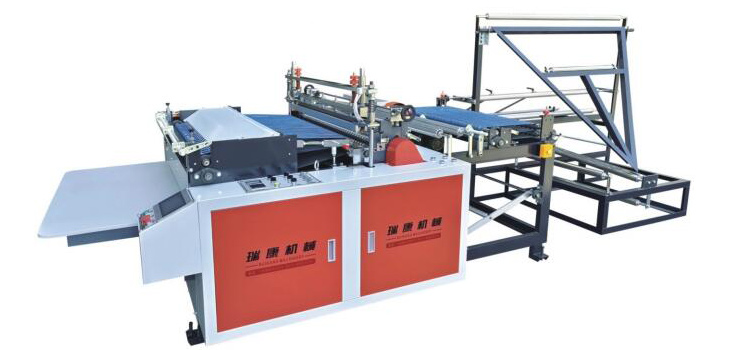
The RK‑YHQB bubble bag making machine uses a photoelectric tracking system with a timed‑out alarm and automatic stop. The sensor reads the printed registration marks. If the mark is not detected at the expected interval, the machine triggers an alarm and stops immediately. The operator corrects the film position or addresses the splice and restarts. The scrap material wasted is limited to one or two bags.
For a line running 120 bags per minute, avoiding a 2‑minute blind run of 240 misprinted bags can save 240 bags of material plus the labor to sort them. Over a year of two‑shift operation, the auto‑stop feature can save tens of thousands of misprints.
Bubble bag making machines produce edge trim – the border of the bubble film that is cut away to form the bag’s finished width. On a basic machine, the trim falls onto the floor or into a bin. The operator pauses production to remove it, or it builds up and jams the machine.
The RK‑YHQB integrates an edge‑trim automatic recycling system. A vacuum tube pulls the trim away as it is cut and delivers it to a collection container or directly to a granulator for reprocessing. The system is sized for the full 750‑1100mm web width, with suction nozzles positioned at both cut edges.
The material savings from trim recycling are typically 5‑8% of the film input, depending on the bag width and the edge margin required. For a plant processing 1,000 kg of bubble film per week, that saving represents 50‑80 kg of material per week – enough to cover the machine’s electricity cost and contribute to the payment.
If the vacuum suction is too weak, the trim falls back onto the stacker. If it is too strong, the trim flutters and can wrap around the cutter blade. The RK‑YHQB’s recycling system uses a frequency‑controlled fan that adjusts suction power based on the line speed. At 120 bags per minute, the fan runs at full speed; during acceleration or deceleration, it ramps proportionally, preventing trim from dropping or fluttering.
A bubble bag machine that loses its settings after a power outage or an emergency stop forces the operator to re‑set the registration from scratch. The RK‑YHQB uses a Taiwan‑made PLC control system with color tracking memory. The operator teaches the machine the registration mark position once. The PLC stores the value in non‑volatile memory. After a restart, the machine resumes from the saved position without recalibration.
The color tracking sensor is adjustable for different mark colors and contrasts. For low‑contrast marks (e.g., yellow print on white bubble film), the sensor sensitivity can be increased. For high‑contrast marks (black on white), the sensor can be set to a faster response time. The PLC logs the number of marks missed, helping maintenance identify when the sensor needs cleaning or the film tension needs adjustment.
| Feature | RK‑YHQB Specification |
|---|---|
| Max web width | 750‑1100 mm |
| Bag making speed | 120 pcs/min |
| Control system | Taiwan PLC + touch screen |
| Feeding | Photoelectric tracking with auto‑stop |
| Edge trim | Automatic recycling, frequency‑controlled fan |
| Sealing type | Three‑side seal (top/bottom/center?) (Three‑side seal: two sides and bottom) |
| Certification | CE, FCC |
Bubble mailers are typically three‑side sealed: the bottom seal is made first, then the side seals are formed as the bag is cut from the web. The bottom seal must withstand the weight of the product inside. A weak bottom seal causes customer returns and damaged goods.
The RK‑YHQB uses a thermostatic control system for the sealing bars, with independent temperature settings for the bottom sealer and the side sealers. The bottom sealer temperature is typically set 10‑20°C higher than the side sealers to ensure a full melt of the bubble film layers. The sealing pressure is adjustable; for thick bubble film (double layer), the pressure is increased; for thin film (single layer), it is reduced to prevent piercing.
The machine also supports variable bag length settings. The operator enters the desired bag length into the PLC, and the servo‑driven feed rollers advance the film by that length between cycles. For custom bag lengths, the adjustment is made through the HMI rather than by changing mechanical gears.
A roll of bubble film 750mm wide and 500m long might last 45‑60 minutes at 120 bags per minute. When the roll runs out, the operator stops the machine, removes the empty core, loads a new roll, and splices the new film to the tail of the old roll (if the machine has a splicer) or re‑threads the web. Each roll change takes 3‑5 minutes. Over an 8‑hour shift, that is 24‑40 minutes of lost production. The effective speed, factoring in roll changes, is roughly 90‑100 bags per minute, not 120.
The edge‑trim recycling system must keep up with the cutting speed. If a piece of trim misses the suction nozzle and falls onto the stacking table, it will cause a jam. The operator must clear the jam, which takes 1‑2 minutes. On a machine without automatic trim removal, clearing jammed trim can add 10‑15 minutes of downtime per shift. The RK‑YHQB’s frequency‑controlled fan and wide‑mouth nozzles are designed to capture trim even when the film shifts slightly sideways.
The operator must pull a bag from the stack periodically to inspect the seal quality, print registration, and bag dimensions. On an un‑automated line, this QC stop takes 10‑20 seconds every 100 bags, reducing effective speed by 2‑3%. The RK‑YHQB includes an auto‑sample function that automatically ejects one bag every programmed number of cycles into a separate bin, allowing the operator to inspect it without stopping the line.
Ruikang Machinery (Rui'an Ruikang Machinery Co., Ltd.) has manufactured bubble film and bag making equipment since 2003. The RK‑YHQB is their three‑side seal bubble bag making machine, designed for high‑volume production of bubble mailers, air cushion bags, and protective packaging.
The machine is built with a Taiwan PLC control system, a color tracking photoelectric sensor with auto‑stop, an edge‑trim automatic recycling system with frequency‑controlled suction, sealing bars with independent temperature control, and a touch screen HMI for storing job profiles. The web width range is 750‑1100mm, and the bag making speed is 120 pieces per minute. The machine is CE and FCC certified, with safety interlocks on all guards and emergency stops at operator stations.
For a bubble bag making machine that reduces unscheduled stops by 70% and cuts edge‑trim waste by 5‑8%, the RK‑YHQB’s photoelectric auto‑stop, automatic trim recycling, and color tracking memory deliver consistent production through a full night shift.
【Request a quote from Ruikang Machinery】
Contact Ruikang with your required bag width (750‑1100mm), bubble film thickness, and daily output target for a three‑side bubble bag machine quotation with CE documentation.