
When packaging line managers search for "2-Layer vs 7-Layer Bubble Film Machine," they‘re not looking for theoretical engineering white papers. What they actually want is a clear, honest breakdown of which system protects their profit margin better over 12 to 24 months of operation. The short answer: A 2-layer configuration excels when you want fast changeovers and lower machine acquisition costs, while a 7-layer co-extrusion system becomes your best ally when raw material flexibility and puncture resistance drive your bottom line. Understanding this trade-off upfront can save you from a costly misalignment between your production volume and your machine capabilities.
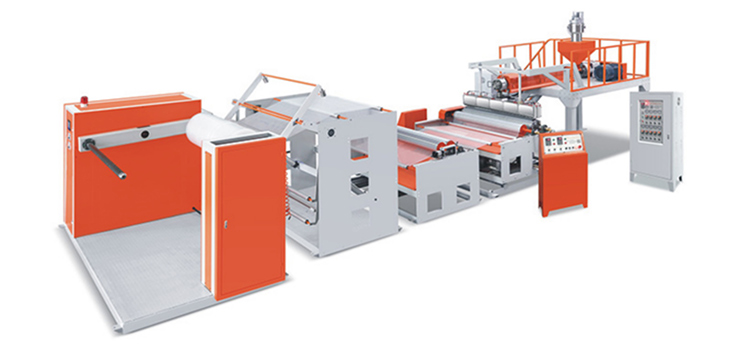
Let‘s demystify that number. A 2-layer configuration essentially co-extrudes two sheets of polyethylene — one flat backing, one embossed with bubble cavities — which are then heat-sealed together. This two-sheet design is precisely why 2 layer air bubble film remains the most common packing material worldwide: it’s inexpensive to produce and works reliably as a shockproof buffer for routine shipments. The machines behind this process utilize straightforward extrusion systems with fewer temperature zones, which translates to simpler operator training and easier access for maintenance repairs.
On the other end, a 7-layer bubble wrap extruder adopts what industry engineers call “functional-layer separation." Instead of a single blended melt, different polymers (virgin LDPE, LLDPE, recycled content, tie layers, barrier resins) flow through dedicated extruders and merge in a multi-channel die. Each layer serves a distinct structural role: some layers enhance puncture resistance, others control flexibility, some improve sealing performance, and a few may carry UV stabilizers or anti-static additives. This multi-material capability is not just decoration; recent technical manuals confirm that classification of film layers “reflects profoundly different production philosophies, especially when working with recycled polymers,” because additional layers can “absorb” the inherent variability of recycled raw materials that would otherwise cause bubble collapse.
For a packaging line dealing with inconsistent regrind or post-industrial waste, that ability to hide variation inside an inner layer is a genuine production insurance policy — not a luxury.
The most painful moment in any packaging operation is not the machine purchase — it‘s the week you realize your bubble film bursts under stacking pressure, triggering customer returns. Here’s where the layer count shows its teeth.
Impact resistance and load capacity. Multi-layer (including 7-layer) bubble wraps consistently outperform two-layer structures in puncture resistance and tensile strength. According to Alibaba‘s industrial equipment analysis, multi-layer bubble wrap machines produce films with “enhanced strength and durability” as well as “improved shock absorption and insulation” — making them suitable for export-grade packaging. In contrast, 2-layer films have documented limitations: “lower puncture and tear resistance” and they are “less efficient for high-volume production.” If your daily packaging includes heavy castings, metal parts with sharp edges, or long-distance sea freight, those limitations will directly hit your operational budget through rework and product damage claims.
Thermal insulation and barrier properties. A 7-layer bubble wrap can block infrared radiation and provide thermal insulation for temperature-sensitive goods — applications where a standard 2-layer sheet would be useless. Some variants of 7-layer air bubble cushion extrusion systems are even used as impact-resistant expansion joints in road and bridge construction, far beyond conventional packaging. While those specialty applications are niche, the core principle applies to any business shipping during extreme seasons: layered film structures trap air differently, creating measurable R-value differences.
Material usage efficiency. Counterintuitively, a well-tuned 7-layer line can sometimes lower your total resin consumption for the same protective performance. Because each layer is optimized for a specific mechanical property (strength layer, sealing layer, tie layer), less “general-purpose” resin is wasted. For companies already sourcing recycled plastic material compatible machines, multi-layer configurations are particularly attractive because they can bury lower-quality recycled content inside inner plies, preserving surface finish and bubble integrity.
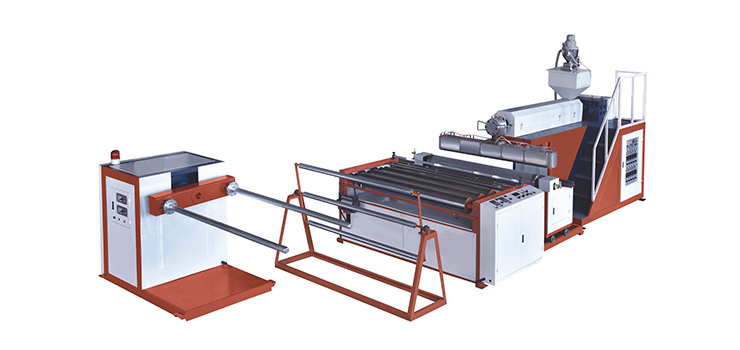
The decision between 2-layer and 7-layer PE bubble film equipment is also an ergonomics and facilities question. A typical 2-layer line occupies less square footage and uses fewer screw barrels, meaning your electric bill reflects single-drive consumption for most models. Maintenance intervals are wider because there’s simply less to break.
But don’t romanticize simplicity. 2-layer extruders offer limited adjustment range for bubble diameter and sheet thickness. Fixed-parameter machines cannot accommodate large-diameter bubbles (over 20mm) without swapping molding drums, a process that costs production downtime. If your e-commerce business expects SKU diversity — from lipstick tubes to glass vases to ceramic bowls — the inability to quickly change bubble profiles may force you to maintain separate inventory of pre-made film, which eats warehousing cost.
7-layer lines, by contrast, have tighter calibration requirements. Co-extrusion molding demands precise independent control of temperature, pressure, and extrusion speed for each screw barrel — which means more PLC parameters for your operators to manage. The learning curve is steeper. One manufacturer notes that multi-layer lines require “a steeper learning curve for operators” and technicians must be skilled in diagnosing layer-interface defects like delamination or uneven layer distribution. For a factory with low staff turnover and existing extrusion experience, that’s manageable. For a startup packaging operation, it could become a source of chronic frustration.
Let‘s talk money transparently. The global market for bubble wrap extruders was valued at approximately $361 million in 2024, and analysts project it will reach $499 million by 2031, growing at a CAGR of 4.8 percent — expansion driven largely by e-commerce and demand for automation features. In this growing market, multi-layer bubble film co-extrusion machines command higher initial capital expenditure, but they also open opportunities that 2-layer lines cannot touch.
A small to medium-scale packaging business focused on local distribution of lightweight, non-fragile goods (e.g., apparel in poly bags) will likely find the return on investment for a 7-layer system unnecessarily long. A 2-layer machine achieves breakeven faster when your film thickness stays below 80 microns and your bubble diameters range from 6 to 10mm. The equipment is also easier to finance and requires less specialized installation — factors that matter for bootstrapped operations.
However, once your clients demand certified puncture resistance for heavy industrial components or require export compliance with specific film strength metrics, a 7-layer protective packaging production line becomes a competitive necessity rather than an upgrade. Selling into markets like automotive parts distribution or overseas electronics logistics, your packaging spec sheet is part of your quality promise. A 7-layer system allows you to blend anti-static masterbatch in one dedicated extruder while keeping food-grade LDPE separate — a degree of contamination control impossible with a single-stream 2-layer configuration.
What neither number captures adequately is the degree of customizable packaging machinery configuration available from established manufacturers. The best extrusion lines come with adjustable die heads, multiple mold drums for bubble size changeover, and options for integrating post-extrusion lamination stations — not just a fixed layer count etched into a brochure.
A reputable bubble wrap machine manufacturer will work with you to specify screw designs that match your specific blend of virgin to recycled resins, configure cooling systems for your local humidity conditions, and install automation packages that match your daily runtime hours. This is where the brand behind the machine matters more than the theoretical layer count. For example, suppliers who offer CE-certified extrusion safety compliance and on-site installation support can dramatically reduce your commissioning time, a hidden cost that inexperienced buyers often overlook.
If you are actively weighing these trade-offs for your next equipment purchase, explore the available configurations from specialized extrusion manufacturers. Getting a detailed quote with your actual production volumes and material types will clarify whether a 2-layer or 7-layer architecture aligns with your cash flow cycle and quality requirements. You can check detailed specs here to compare voltage requirements, output ranges per hour, and customization options such as anti-static or UV additive feeders.
Purchasing extrusion equipment without analyzing your historical damage return rate is like buying a truck without knowing your payload. Run the numbers: if your current third-party bubble film causes 1.5 percent damage claims on shipments under 5 kilograms, a 2-layer machine might replicate that same performance in-house at lower per-meter cost. But if you are absorbing 5 percent damage claims on heavy or mixed-SKU shipments, the superior cushion absorption consistency of a 7-layer system will pay for its premium within the first year by slashing those returns.
No machine is universally “better” — only better for your specific pallet weight, shipping distance, and material supply chain. Start with a realistic assessment of what percentage of your packages currently fail in transit. Then match the machinery accordingly. A 2-layer line gives you entry-level production with low risk and fast payback. A 7-layer bubble extrusion system gives you engineering headroom for high-value contracts and difficult-to-pack geometries. Choose not by layer count alone, but by the hidden cost of film failure that you can finally eliminate.