
You’ve priced bubble film machines. The numbers blur together: 2500mm width, 30m/min speed, 35:1 screw ratio. But when you’re packaging fragile items day after day – ceramics, auto parts, small appliances – the difference between a line that holds tension and one that wanders is not on the brochure. It’s in the extrusion consistency, the bubble density, and the ability to run recycled LDPE without constant adjustments. This guide looks at four real specifications that separate a reliable bubble film machine from one that fights you every shift.
A bubble film machine takes polyethylene – LDPE, LLDPE, or recycled material – and melts it, forms bubbles, and winds it into rolls. The bubble layer provides air cushioning against shock, moisture, and pressure. It replaces loose fillers and is used for mailing valuables, cosmetics, electronics, precision instruments, handicrafts, auto parts, ceramic glass, fire‑fighting equipment, and furniture. But different products need different bubble sizes and film strengths.
A bubble film machine that can handle multiple raw materials gives you flexibility.
The RK YHPEG‑4LC high‑speed bubble film machine supports a maximum film width of 2500mm. That means you can produce rolls up to 2.5 meters wide. Wider rolls reduce side waste when you slit to smaller sizes. For large‑format packaging (furniture, industrial equipment), a wide machine saves joining multiple narrow rolls.
Measure your largest product plus wrap allowance. If you primarily pack mid‑size items (cosmetics, small appliances), a 1200‑1500mm width may be enough. But the 2500mm capability gives you room to grow into larger accounts.
The machine uses LDPE and LLDPE as base materials. It also supports recycled LDPE. This is not trivial. Many machines run virgin resin well but choke on regrind. If you have access to post‑industrial or post‑consumer recycled pellets, a machine that accepts them lowers your material cost.
You can add anti‑static agents and other functional materials. This is useful for electronics packaging (ESD protection) or dust‑sensitive products.
The machine produces bubble film in 2 to 4 layers. More layers mean stronger cushioning and better barrier properties. A 2‑layer bubble film has bubbles on one side and a flat surface on the other. A 4‑layer structure can have bubbles on both sides (extra protection) or different bubble sizes on each side.
2 layers – general protective wrapping, light items
3‑4 layers – heavy or fragile items, frequent shipping
The machine has a screw diameter combination of Φ85/70/50mm (three extruders?). The aspect ratio is 35:1 (length to diameter). A 35:1 ratio is longer than standard 25:1 or 30:1 screws, providing better mixing and melt uniformity. This directly affects bubble consistency – a key complaint on cheaper machines.
Longer screws mean the plastic stays in the heated barrel longer. This gives more time for melting and mixing, especially when you run recycled material with varying melt flow. Uniform melt = uniform bubble formation.
A bubble film machine with a 35:1 screw and 2‑4 layer capability will produce denser, more consistent bubbles.
The machine runs at 5 to 30 meters per minute. That range covers both thin, low‑density film (faster speed) and thick, multi‑layer bubble film (slower speed). Width options span 1000‑3500mm, though the RK YHPEG‑4LC model is specifically 2500mm.
You can configure the machine with single or multi‑die heads. Multi‑die heads allow you to produce multiple widths or different bubble patterns simultaneously, increasing throughput for commodity films.
The machine adopts full PLC control with automatic winding, thickness adjustment, and feeding. The intuitive interface ensures easy operation and monitoring. For a busy packaging line, automation reduces operator errors and frees up labor for other tasks.
The manufacturer states the optimized design cuts noise, boosts stability by 30%, and extends service life. A less fatiguing machine means fewer maintenance calls.
A bubble film machine with full PLC control and automatic winding is a machine you can trust to a single operator.
Ruikang Machinery was founded in 2003. For more than 20 years, it has focused on plastic packaging machinery – bubble film machines, bubble bag machines, and film blowing lines. The company integrates R&D, manufacturing, sales, and after‑sales service.
Employees: more than 200
Global reach: covers more than 50 countries (Southeast Asia, Middle East, South Africa)
Customers: served over 3,000 packaging companies worldwide
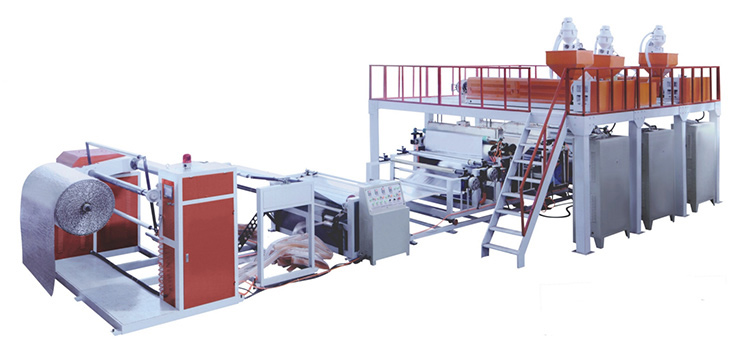
Ruikang’s RK YHPEG‑4LC high‑speed bubble film machine is fully automatic, PLC controlled, and built for LDPE, LLDPE, and recycled materials. It has a maximum film width of 2500mm, supports 2‑4 bubble layers, and uses a Φ85/70/50mm screw set with a 35:1 aspect ratio.
Not every buyer needs the same setup. Use this quick checklist:
Film width – 2500mm covers most industrial needs; if you only run small rolls, ask about narrower options (1000‑1500mm)
Layers – start with 2 layers for general use; upgrade to 3‑4 layers for heavy or delicate items
Screw size – the Φ85/70/50mm combination is designed for high output; confirm it matches your expected throughput
Automation – full PLC is standard; verify that automatic winding is included for your roll diameter
Q: Can this machine run 100% recycled LDPE?
Yes, the machine supports recycled LDPE. However, the quality of recycled pellets varies; you may need to adjust melt temperature and screen packs more frequently.
Q: What is the typical power consumption?
Not specified in the provided data. Contact Ruikang for a detailed energy report based on your output.
Q: Does the machine come with a warranty?
Ruikang offers after‑sales service; for warranty terms, request a formal quote.
You don’t need to guess which options fit your products. Tell Ruikang your target width, layer count, and raw material mix (LDPE, LLDPE, recycled). They can recommend the right screw set, die head configuration, and automation package.
A bubble film machine that matches your specific application will run reliably for years.