
Starting a protective packaging business often begins with one critical decision: should you buy a smaller, budget-friendly unit or invest in a high-throughput production line? A packaging entrepreneur recently shared his dilemma – his entry-level machine produced just enough for local e-commerce clients, but after landing a contract with a regional logistics hub, he faced constant overtime and frequent breakdowns. This scenario plays out daily across the industry.
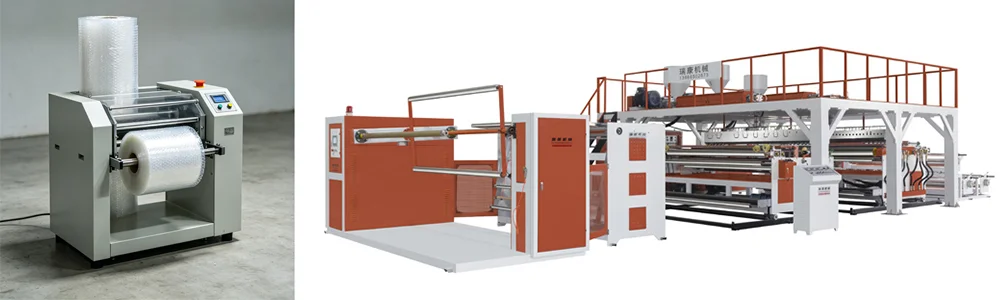
To help you avoid such growing pains, let’s break down the total cost of ownership for each tier, using real-world metrics and maintenance factors that are often overlooked.
The most obvious difference is the upfront price. An entry-level unit typically ranges from $3,000 to $15,000, while industrial-scale systems start at $50,000 and can exceed $200,000. However, focusing only on the sticker price ignores site preparation, power requirements, and operator training.
Industrial equipment often demands reinforced flooring, three-phase power, and dust extraction systems – adding 15-25% to the base price. Conversely, entry-level machines plug into standard outlets and fit on a workbench. But lower upfront cost can trap you in a cycle of frequent replacement if production scales up. For a detailed breakdown of model specifications and what’s included in each price tier, explore detailed equipment specifications
| Cost Factor | Entry-Level Machine | Industrial-Grade System |
|---|---|---|
| Material waste rate | 8-12% (due to less precise tension control) | 2-4% (closed-loop tension system) |
| Energy consumption per ton | ~180 kWh | ~110 kWh |
| Operators needed per shift | 1-2 (manual roll changes) | 0.5 (automatic splicing & winding) |
| Average uptime | 70-75% | 90-95% |
Waste reduction is where industrial systems quickly recover their higher price. For a business producing 500 tons annually, cutting waste from 10% to 3% saves 35 tons of raw LDPE resin – worth over $50,000 at current market rates. Additionally, industrial units often include inverters and servo drives that lower energy use by nearly 40%.
But does that mean entry-level machines are never cost-effective? Not at all. For shops running less than 50 tons per year or offering custom small-batch bubble wrap (e.g., anti-static or colored layers), the lower depreciation and simpler operation of a basic unit make more sense. To see which production scale matches typical customer requirements across industries, browse application-specific configuration guides.
Many buyers underestimate how often entry-level components need replacement. Common failure points include:
Gearboxes (every 1,500-2,000 hours on economy models)
Heating rollers (uneven temperature leads to bubble collapse)
Pneumatic cylinders (seal leaks after 6-12 months)
Industrial machines use hardened gears, Japanese-brand bearings, and modular heating zones that last 8,000+ hours between major overhauls. However, they require scheduled lubrication, alignment checks, and thermal calibration – tasks that demand trained technicians. A mid-sized packaging firm in Ohio reported that switching to an industrial line cut their monthly maintenance hours from 22 to 6, but they had to invest in a two-day training course for operators.
Proper care can extend any machine’s life. Whether you choose a compact or heavy-duty model, following a structured maintenance routine prevents sudden breakdowns. download a preventive maintenance checklist and troubleshooting tips
Entry-level equipment excels at short runs and frequent changeovers – ideal for packaging startups offering custom sizes or prototypes. Industrial lines shine in continuous, 24/7 operation with automatic roll changing and online thickness gauging.
One important nuance: some industrial systems allow quick die changes to produce different bubble heights (3mm, 5mm, 10mm) within 15 minutes, while entry-level machines often require manual bolt adjustments and 45+ minutes of downtime. If your order mix includes diverse bubble profiles, the faster changeover of an industrial unit directly boosts usable output.
Ask these three questions to guide your purchase:
What is your monthly output target?
< 10 tons → Entry-level (or even used industrial)
10–30 tons → Consider high-end entry or entry-level industrial
30 tons → Industrial mandatory for positive ROI
Do you have in-house technical staff?
No → Choose a machine with remote diagnostics and local service network
Yes → You can optimize operating costs on industrial gear more aggressively
Will you produce specialty films (anti-static, UV-blocking, recycled content)?
Entry-level units struggle with consistent additive mixing; industrial extruders with gravimetric dosing are recommended.
Even after this analysis, many factors remain site-specific – from local electricity tariffs to the experience of your operators. For a personalized recommendation based on your exact production plan and budget, request a one-on-one consultation with RUIKANG’s application engineers
A protective packaging converter in Vietnam started with two entry-level units producing 8 tons/month. After 18 months, they upgraded to one industrial-grade system from RUIKANG. Results after 12 months:
Labor cost per ton dropped 62% (from $85 to $32)
Scrap rate fell from 11% to 3.5%
Energy cost per ton reduced 38%
Total annual savings: $124,000
Payback period on the industrial machine: 11 months
These figures align with industry benchmarks published by the Flexible Packaging Association (FPA, 2024). Always verify such data with your own material costs and utility rates.
Choosing a machine solely on purchase price often leads to higher total cost within two years. But overspending on an industrial line for a hobby-scale workshop is equally wasteful. The optimal choice sits at the intersection of your current order volume, growth forecast, and maintenance capability.
If you are looking for a reliable partner that offers both entry-level and industrial configurations with transparent cost breakdowns and after-sales support, consider exploring RUIKANG’s range of protective packaging equipment. Their team provides site assessments and three-year cost projection models – a helpful starting point for data-driven decisions.
