
For warehouse operators, e-commerce fulfillment managers and industrial packaging supervisors hunting for cost-effective cushioning production gear, choosing a steady, high-efficiency Bubble Film Machine is never a random purchase—it directly cuts packaging waste, speeds up daily shipping workflows and lowers long-term labor costs. Based on 2025 packaging industry data from the Global Packaging Machinery Association, nearly 62% of small and mid-sized enterprises regret hasty equipment selection due to ignoring on-site adaptation and post-sales service, which makes targeted selection strategies extra critical for every procurement decision.
The first practical step before any budget planning is clarifying your daily packaging throughput and peak order demands. Many buyers only focus on machine price while overlooking actual production efficiency, leading to underpowered devices that bottleneck shipping during holiday sales or flash order surges.
Light-duty scenarios like boutique e-commerce, handmade product shipping and small-batch retail packaging only need low-to-medium output devices with compact frames. In contrast, factory-level bulk logistics, large commodity warehousing and cross-border freight teams require high-speed continuous operation models to keep up with round-the-clock packaging tasks.
RuiKang has tailored differentiated output configurations for different business scales, covering entry-level compact units to heavy-duty industrial-grade devices. Check customized parameter matching to lock in equipment specs that perfectly fit your daily operation rhythm, avoiding over-investment or insufficient production capacity.
Workshop and warehouse space varies wildly from one business to another. Some urban storage sites have narrow aisle layouts and limited floor areas, while suburban industrial parks boast spacious, open placement zones. Ignoring spatial compatibility will result in cramped operation, blocked material feeding channels and even hidden safety hazards in daily use.
Modern packaging processing gear comes with flexible structural designs, including vertical integrated frames, horizontal split layouts and foldable auxiliary brackets. Compact footprint designs are tailor-made for urban small warehouses, while expandable combination structures suit factories with room for future workflow expansion.
Beyond floor space, you also need to check power supply specifications, noise emission data and heat dissipation performance. Long-hour operation stability largely depends on internal structural rationality, a detail often overlooked in superficial product comparisons.
Nowadays, personalized packaging demands are rising sharply, making multi-specification raw material compatibility a core evaluation indicator. Different protective wrapping raw materials differ in thickness, toughness and environmental attributes, and generic equipment often fails to adapt to degradable materials, thickened anti-tear materials or ultra-thin lightweight rolls.
Brands with mature customization capabilities can adjust rolling tension, forming thickness and finished product width according to client-specific needs. For brands focusing on eco-friendly logistics, degradable raw material adaptation and low-carbon operation modes have become non-negotiable demands.
As a brand deeply rooted in packaging machinery R&D and manufacturing, RuiKang supports one-stop personalized modification, from size adjustment to functional module addition. Explore application customization cases to see how tailored upgrades solve unique packaging pain points for niche industries.
Industrial processing equipment is a long-cycle investment, not a one-time consumer good. Cheap generic devices often come with blank after-sales policies, difficult-to-source replacement parts and complicated daily maintenance, which will generate hidden high costs within 1 to 2 years of use.
Key maintenance details to verify include: wearing part replacement difficulty, regular maintenance cycle, remote technical guidance services and global parts delivery efficiency. Authorized brand suppliers usually provide detailed operation manuals, online troubleshooting tutorials and local agent maintenance support, greatly reducing unexpected downtime losses.
Independent third-party machinery operation reports show that equipment with complete after-sales systems can extend service life by 30% on average, compared with no-brand products with fragmented after-sales guarantees.
When sorting out multiple packaging protection options on the market, it’s essential to make horizontal comparisons between manual cushion filling tools, pre-made protective wrapping rolls and integrated on-site production units.
Manual filling cushions have ultra-low initial costs but rely heavily on manual labor, with slow production speed and inconsistent finished product quality, totally unable to cope with high-volume shipping needs. Pre-produced protective film rolls save on-site operation trouble, yet they take up massive storage space, face high bulk transportation fees and cannot adjust specifications flexibly according to product sizes.
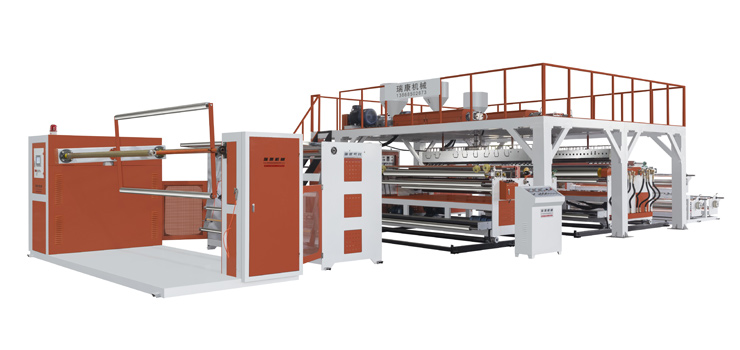
In this context, the Bubble Film Machine stands out as a balanced and efficient middle solution. It realizes on-demand on-site production, requires no large inventory stacking, and can freely switch finished product specifications to match fragile goods, irregular items and heavy industrial parts packaging needs. Compared with the other two mainstream methods, it balances initial input, labor consumption and operational flexibility, becoming the preferred option for long-term stable packaging operation.
For buyers who want to balance cost performance and long-term operational flexibility, this on-site production mode effectively solves the pain points of inventory pressure, material waste and inefficient manual packaging. Access detailed functional comparison data to clearly distinguish the core strengths of different packaging equipment and make a more rational procurement choice.
Picking suitable packaging processing equipment is a systematic decision that combines output demand, space condition, material adaptation, after-sales security and solution matching. The five core tips above summarize real procurement pain points from frontline packaging managers and industrial equipment purchasers, fully fitting the practical selection logic of global B2B buyers.
Choosing a reliable brand like RuiKang not only guarantees qualified equipment quality, but also provides continuous technical support and customized service, letting your packaging workflow achieve cost reduction and efficiency improvement steadily in the long run. If you need further parameter consultation and budget estimation for packaging production equipment, you can always refer to official product details for more professional guidance.